
World
-
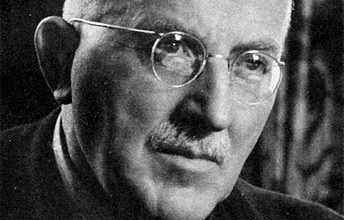
Why was Hermann Staudinger awarded Noble Prize in 1953?
German organic chemist Hermann Staudinger demonstrated the existence of macromolecules, which he characterised as polymers. He received the 1953 Nobel…
Read More » -
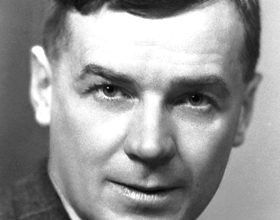
Why was Richard Laurence Millington Synge awarded Noble Prize in 1952?
British biochemists Richard Laurence Millington Synge and Archer Martin shared the 1952 Nobel Prize in Chemistry for the invention of…
Read More » -
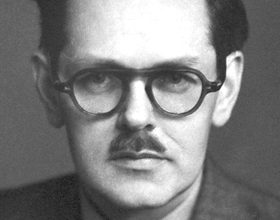
Why was Archer John Porter Martin awarded Noble Prize in 1952?
British chemists named Archer John Porter Martin and Richard Synge shared the 1952 Nobel Prize in Chemistry for developing partition…
Read More » -
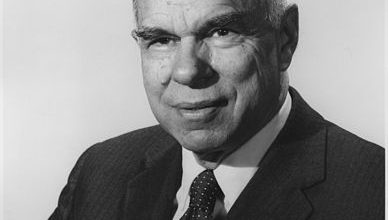
Why was Glenn Theodore Seaborg awarded Noble Prize in 1951?
American chemist Glenn Theodore Seaborg shared the 1951 Nobel Prize in Chemistry for his work and contribution to the synthesis,…
Read More » -
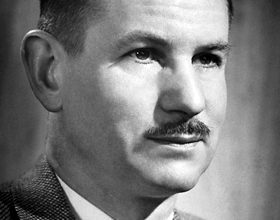
Why was Edwin Mattison McMillan awarded Noble Prize in 1951?
A transuranium element, neptunium, was initially created by American physicist Edwin Mattison McMillan. Edwin M. McMillan and Glenn Seaborg shared…
Read More » -
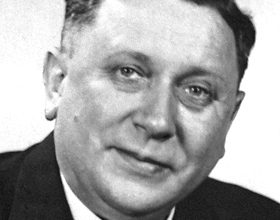
Why was Kurt Alder awarded Noble Prize in 1950?
The Diels-Alder reaction, often known as diene synthesis, is a widely used method for synthesising cyclic organic compounds. Kurt Alder,…
Read More » -
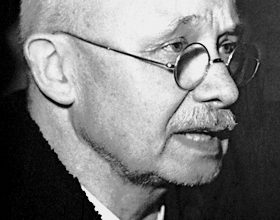
Why was Otto Paul Hermann Diels awarded Noble Prize in 1950?
The German chemist Otto Paul Hermann Diels was born. His most notable work was on the Diels-Alder reaction, a method…
Read More » -
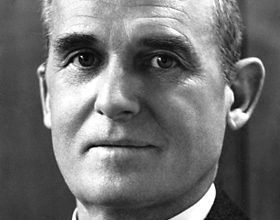
Why was William Francis Giauque awarded Noble Prize in 1949?
A 1949 Nobel Prize in chemistry was awarded to William Francis Giauque, an American chemist of Canadian descent, for his…
Read More » -
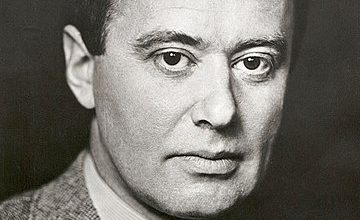
Why was Arne Wilhelm Kaurin Tiselius awarded Noble Prize in 1948?
The 1948 Nobel Prize in Chemistry was awarded to Swedish biochemist Arne Wilhelm Kaurin Tiselius “for his research on electrophoresis…
Read More » -
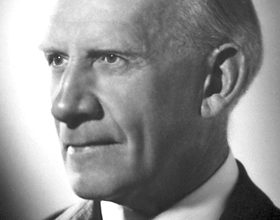
Why was Sir Robert Robinson awarded Noble Prize in1947?
Sir Robert Robinson was a British organic chemist, and he won the Nobel Prize in 1947 for his work on…
Read More »